
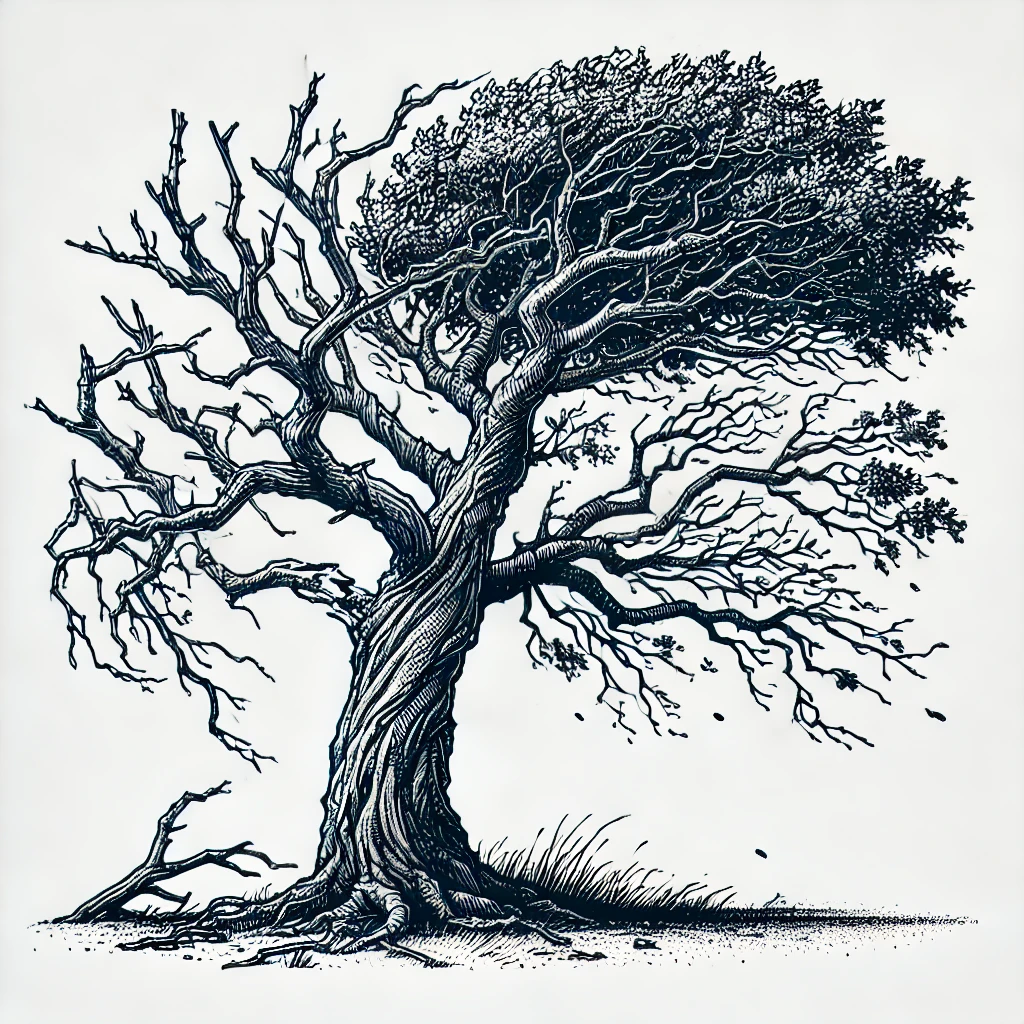
**Assessing Tree Deformation: Stress & Strain**
In the field of arboriculture, understanding tree deformation is pivotal for assessing their structural integrity and ensuring public safety. Trees, being living biomechanical structures, dynamically interact with their environment, adapting to various stressors such as wind, gravity, and physical loads. This article delves into the critical aspects of mechanical stress and strain in tree trunks and branches, offering insights into how trees manage and display signs of deformation.
### Mechanical Stress and Strain
Stress and strain in trees are fundamental concepts that relate to the forces exerted upon a tree and the subsequent deformation it undergoes. Mechanical stress is the force per unit area exerted on a material, while strain is the deformation or displacement that occurs as a result of the applied stress. In trees, stress typically arises from environmental factors like wind pressure, the weight of the foliage, and even human activities such as construction and landscaping. These forces can induce stretching, compression, and bending of tree tissues.
### Impact of Wind and Load-Bearing on Tree Deformation
Wind is one of the primary factors influencing tree stress and strain. When subjected to wind forces, trees sway, causing mechanical stress throughout their structure. This swaying can lead to the development of reaction wood, which is a specialized wood that forms in response to mechanical stress and helps the tree regain structural stability. In angiosperms (broad-leaved trees), reaction wood is known as tension wood and forms on the upper side of the leaning part, while in gymnosperms (conifers), it is called compression wood and forms on the lower side. These adaptations are crucial for maintaining balance and structural integrity under continuous wind load.
Load-bearing stress, particularly in heavily foliated or fruit-laden branches, can lead to deformation over time. As branches bear more weight, they may bend or droop, increasing strain on the branch tissues. In extreme cases, excessive load can cause branches to snap or even lead to partial or total tree failure.
### Distribution of Mechanical Forces
The way trees distribute mechanical forces across their structure is a marvel of natural engineering. Trees have evolved to optimize their architecture to evenly distribute stress, reducing the likelihood of catastrophic failure. The trunk and branches typically exhibit tapering, with the thicker base providing robust support while the thinner upper sections are more flexible. This gradation helps in managing the mechanical forces and prevents localized stress concentrations that could lead to failures.
### Indicators of Excessive Mechanical Stress
Recognizing the signs of excessive mechanical stress is crucial for arborists and tree caretakers. Common indicators include cracks, splits, and visible deformation in the trunk or branches. Trees may also exhibit abnormal growth patterns, such as twisted trunks or leaning. Bark abnormalities, like bulges or depressions, are additional visual cues indicating internal stress.
Another significant indicator is the presence of reaction wood, which suggests that the tree has been compensating for prolonged mechanical loads. While reaction wood helps in stabilizing the tree, its presence can signify underlying stress and potential future risks, warranting closer inspection and possible intervention.
### Role of Tree Architecture
Tree architecture plays a vital role in managing external forces and mitigating mechanical stress. The branching pattern, root structure, and overall form of the tree contribute to its ability to withstand environmental stressors. Trees with a balanced canopy and well-distributed root systems are typically more resilient to mechanical forces. However, asymmetrical growth, often resulting from environmental constraints or improper pruning, can compromise stability and increase the risk of failure.
### Conclusion
Assessing tree deformation involves understanding the intricate relationship between stress, strain, and a tree’s adaptive strategies. By identifying mechanical stress indicators and analyzing tree architecture, arborists can make informed decisions to mitigate risks and enhance tree stability. Regular Visual Tree Assessments (VTA) and proactive maintenance practices, such as proper pruning and cabling, are essential for sustaining tree health and safety in urban environments. As stewards of these majestic biomechanical structures, it is our responsibility to ensure they continue to thrive and contribute to our ecosystems.
-Written by Mark.
Leave a Reply