
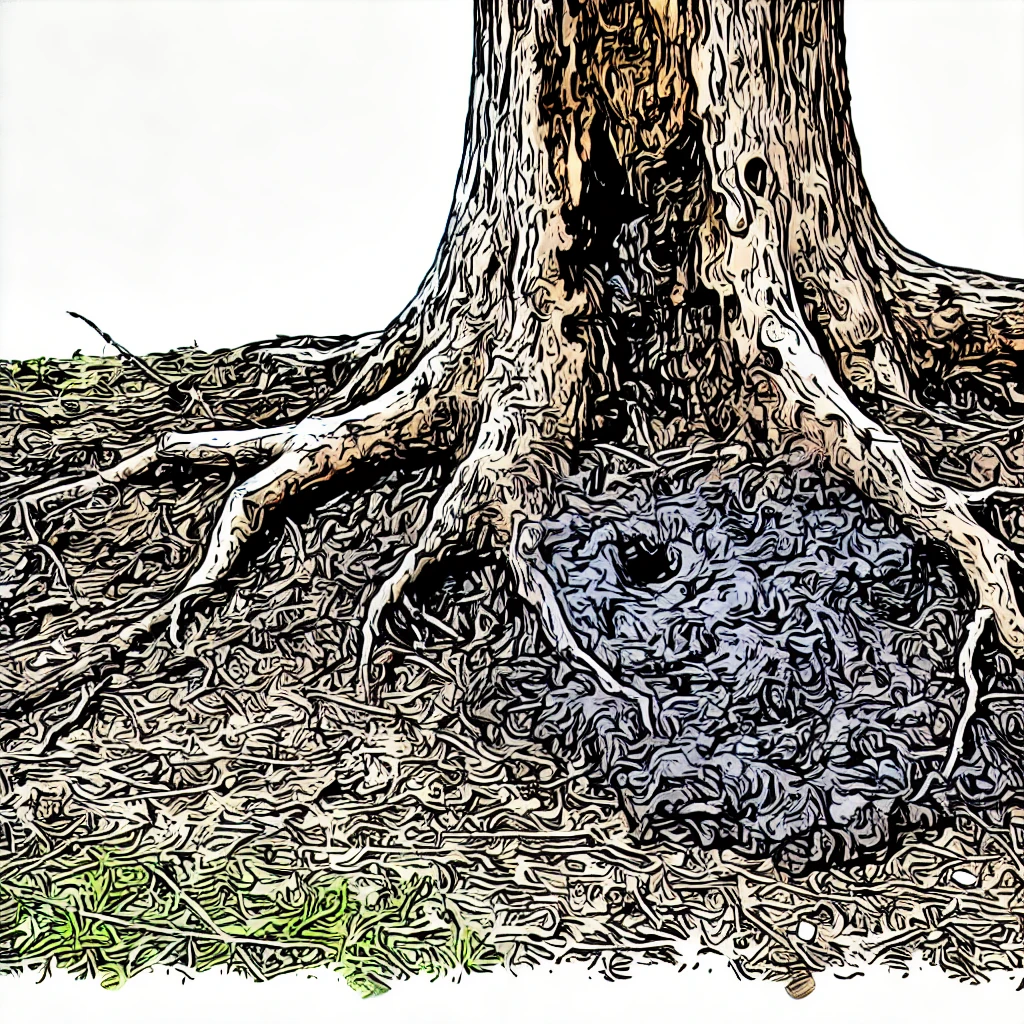
# Assessing Tree Stability Through Root Analysis
As an arborist, I’ve often found that the cornerstone of a tree’s health and stability lies hidden beneath the soil. The root system, often out of sight, is crucial to a tree’s structural integrity. In today’s blog, we’ll delve into the intricacies of assessing tree stability through root analysis, using principles derived from “The Body Language of Trees: A Handbook of Visual Tree Assessment.”
## Understanding the Relationship Between Root Structure and Tree Stability
The stability of a tree is heavily influenced by its root architecture. An elaborate and well-anchored root system effectively anchors the tree, providing both mechanical support and the necessary uptake of nutrients and water. Conversely, compromised or poorly developed roots can spell disaster.
1. **The Support Network**:
– A robust root network spreads out radially, providing a broad support base.
– Surface roots stabilize the tree against wind forces.
– Deep roots anchor the tree vertically, providing resistance against toppling.
In our detailed evaluations, we consider the overall distribution, depth, and health of the root system. Trees with uneven or shallow root systems are more prone to instability and eventual failure.
## Signs of Root Rot or Decay and Their Impact
Root decay, often caused by pathogenic fungi, is one of the primary culprits in compromised tree stability. Identifying these early signs can be crucial:
1. **Symptoms of Root Rot**:
– Fungal fruiting bodies at the base.
– Discolored or soft, spongy roots.
– Diminished root mass.
Root rot diminishes the tree’s anchorage and nutrient absorption capacity, leading to potential failure, especially during storms or high winds.
## Identifying Poor Root Anchorage and Shallow Rooting
Various factors can result in poor root development, which directly affects the tree’s stability. Observing outward symptoms can give clues about these underlying issues:
1. **Signs to Watch For**:
– Trees leaning excessively.
– Soil heaving or cracking around the base.
– Exposed roots, indicating erosion or shallow soil.
Trees situated in compacted or waterlogged soils often exhibit shallow root systems, making them more susceptible to lodging and failure under external pressure.
## External Indicators of Root Failure
Outward signs can provide a quick diagnostic tool for identifying potential root failures:
1. **Visual Clues**:
– A tilted tree can signify root heaving on one side and sinking on the other.
– Cracks in the soil around the tree base indicate shifting or root movement.
– Gnarly or twisted roots visible at the surface can mean spatial limitations underground.
Prompt identification can allow for interventions like root zone remediation or mechanical stabilization.
## The Importance of Root Inspection in Tree Risk Assessment
VTA (Visual Tree Assessment) is an invaluable, non-invasive technique. When applied to root analysis, it can provide an early-warning system to predict potential instability:
1. **Non-invasive Techniques**:
– Soil probing around the base to feel for root solidity.
– Analog testing using air excavation tools for a clear view without damaging the roots.
Beyond the quick inspections, advanced tools such as resistograph drills and ground-penetrating radar can provide detailed insights into root conditions, albeit with more complexity and cost.
## Concluding Thoughts on Root Analysis
As modern arborists, we are equipped with both traditional observational skills and advanced technological tools to make informed decisions about tree stability. “The Body Language of Trees” offers a framework for interpreting the silent signals trees send regarding their health and structural integrity.
For homeowners and property managers, understanding the importance of root health can contribute greatly to tree conservation and public safety. Regular assessments, focusing on visible indicators, help forestall hazardous situations and promote long-term tree vitality.
By focusing on the unseen, we preemptively address potential issues before they become visible hazards. Remember, a healthy root system is the foundation of a stable tree.
Safe and insightful tree assessments to all!
-Mark, Professional Arborist
Leave a Reply